The Relational Intelligence Framework™
We are always relating. The question is not whether we are — it's how.
The Relational Intelligence Framework™ is a field-centred systems architecture for seeing clearly, holding complexity, and building human-preserving organizations. It starts from a fundamentally different question: What is happening here?
Join the program waitlist and receive book launch updates:
Free assessment
How relationally intelligent are you?
Take a short, free assessment based on the Relational Intelligence Framework™ and see where your range actually sits — especially under pressure.
New to the concept?
What is relational intelligence?
Explore the foundations of relational intelligence: what it is, how it differs from emotional intelligence, and why it matters for teams under strain.
The Core Shift
Most approaches to conflict, burnout, and workplace dysfunction start by looking at the individual. Coaching asks what skill someone is missing. HR asks what policy was broken. Leadership training asks how to get someone to behave differently. They all ask some version of the same questions: Who is this person? Why are they behaving this way? What is wrong? What skill do they need?
The Relational Intelligence Framework™ starts somewhere different — with the conditions people are relating within, not just the person.
Developed by Julia Huckle, drawing on three decades in healthcare and caregiving systems, the framework (RIF) is a comprehensive methodology for understanding how intersecting forces — load, capacity, power dynamics, moral distress — shape how people interact.
↑ Back to topThe Four Questions
Everything in the Relational Intelligence Framework™ helps answer four questions:
- How am I relating right now?
- What is shaping that?
- What possibilities for relating are actually available?
- How will my way of relating shape what becomes possible next?
SEE helps answer how am I relating. The Five Domains and Integrating Forces help answer what is shaping this. HOLD helps answer what possibilities are actually available. ACT helps answer how will my relating shape what happens next.
↑ Back to topThe Five Domains
The Five Domains are simultaneous lenses. All five are operating at once.
Self
What am I bringing? My history, assumptions, emotions, nervous system state, defensiveness, values, expectations, and current capacity.
Other
Who is this person? Look beyond your first interpretation and beyond the person's role. Your first read is a hypothesis, not a fact.
Relationship
What has happened between us? The history between these specific people: what has been built, what can currently be held, what has been repaired, and what remains unresolved.
System
What is the surrounding system doing? Roles, policies, culture, authority, resources, incentives, structures, and power. The system may be shaping the encounter even when nobody is talking about it.
Context
What larger history or circumstances are present? Cultural, historical, social, and situational forces that may not be visible in the immediate interaction.
Me. You. Us. The system. The wider context.
If we only look at one or two of these, we are likely to mistake part of the picture for the whole.
↑ Back to topThe Relational Field
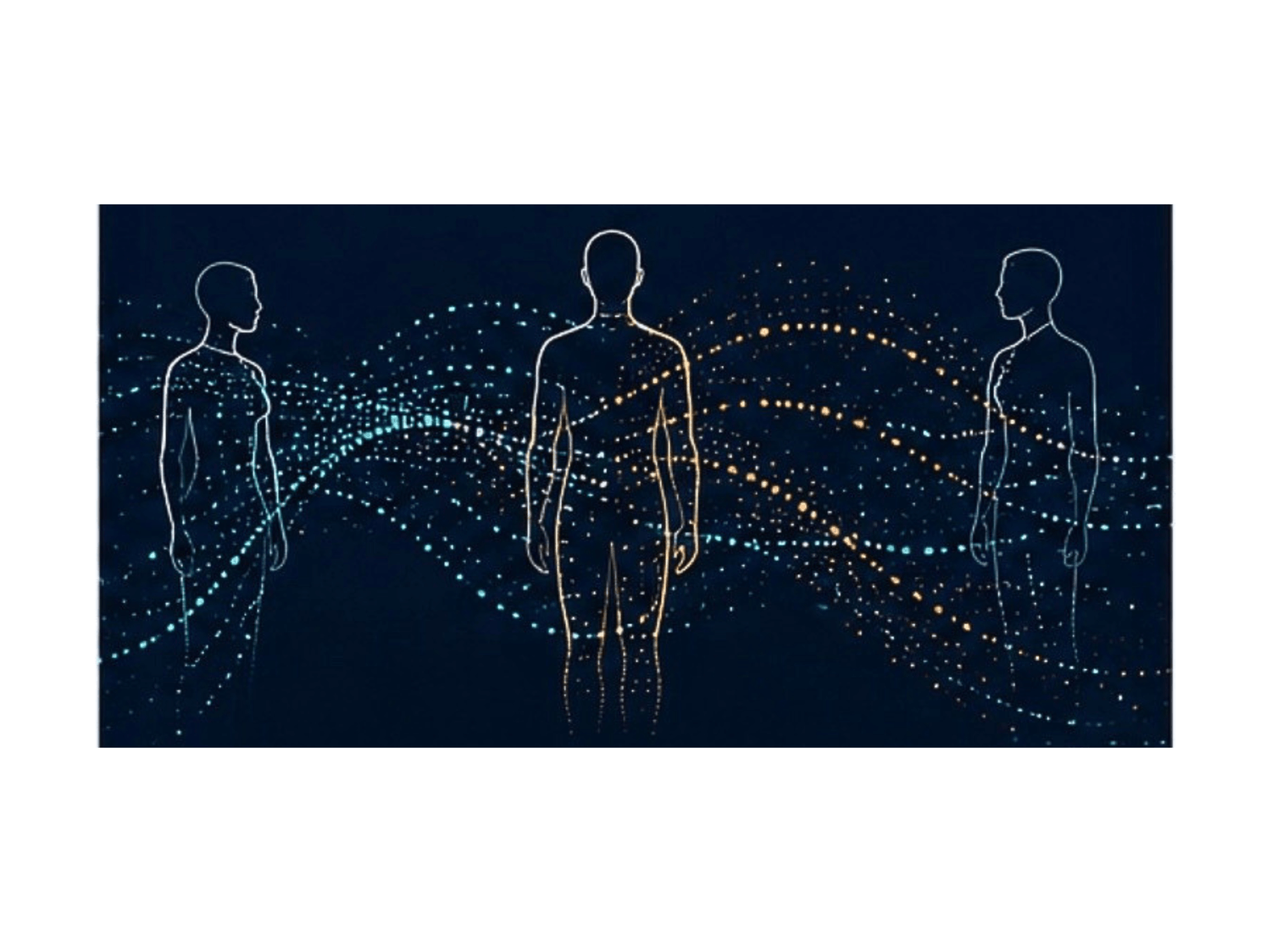
The relational field is the set of conditions people are relating within. It already has a history before the current encounter begins, and what happens now changes what becomes possible next. People never meet in a completely neutral space. They bring previous experiences, expectations, trust or mistrust, power arrangements, unresolved issues, cultural and historical context, and the effects of previous encounters.
The field is:
- A medium, not an empty space. It has substance and can be healthy, strained, depleted, safe, or unsafe.
- Already active. It influences the encounter before anyone makes a deliberate choice.
- Built over time. What people repeatedly do becomes part of the conditions future interactions inherit.
- Shared. The field is not simply something inside one person.
- Capable of holding deposits. Every encounter can add to or draw from what has accumulated.
People bring things into the field. The field affects how they relate. What they do adds to the field.
The Integrating Forces
These forces cut across all five domains.
- Load and capacity — What is each person carrying, and what capacity do they actually have right now? Capability and capacity are not the same thing.
- Time and trajectory — How did we get here, how quickly is this moving, and where is the pattern heading?
- Power and position — Who has authority, who has influence, and what does each position make easier or harder to see? Power can create power blindness: the more authority someone has, the more parts of the field their position may prevent them from seeing.
- History, pattern, and deposits — What has accumulated? What has this field taught people to expect? History is not just the past — what happens now becomes part of the history.
- Values and ethics — What matters to each person, what is non-negotiable, and where do those values conflict?
The Core Values
The ethical foundation the framework is grounded in.
- Whole-person dignity — people are more than their role, behaviour, diagnosis, or current capacity.
- Respect for lived experience — firsthand experience can be genuine knowledge, not merely "input."
- Genuine partnership — participation should be real, not performative.
- Transparency and honesty — say what is actually happening, including what is not known.
- Equity — pay attention to who carries the cost.
- System responsibility — organizations and systems have responsibility for the conditions they create.
- Accountability — good intentions do not remove responsibility for impact.
- Relational safety — people need conditions in which participation is possible and sustainable.
The Relational Maturity Model™ (RMM™)
Relational maturity is not a ladder of personal worth or competence. A person's relational capacity changes with conditions — someone may operate very differently in different relationships, systems, or moments.
Competence × Field Conditions = Behaviour
The useful question isn't "Who am I?" It's "Where am I operating from today, and what is shaping that?"
- Reactive — The field feels like something happening to you. Patterns are mainly seen as other people's characteristics rather than information about the field.
- Aware — You can recognize your patterns, often afterward. You may know what happened without yet being able to interrupt it reliably in the moment.
- Reflective — You can increasingly notice what is happening while it is happening and deliberately interrupt your usual response.
- Integrated — You can hold the Five Domains together and respond differently within difficult conditions because you can see more of the whole field at once.
- Fluid — Relational intelligence becomes less like a technique and more like a way of operating. You can move between perspectives and levels of awareness in real time and contribute to changing the field itself.
There is no permanent arrival. Fields change, capacity changes, and relational intelligence continues to develop.
↑ Back to topThe Three-Step Practical Model: SEE • HOLD • ACT
Designed for real decisions in real conditions, where there may be competing obligations, incomplete information, limited capacity, and no perfect answer.
Step one
SEE — See the whole picture
Look at what is actually happening across all five domains. What is each person carrying? What is it costing them? Whose knowledge has authority here?
Slow down enough to see the whole situation, not just the part that is easiest to notice.
Step two
HOLD — Stay with the complexity
Don't rush to make it simpler than it is. What ethical tensions are present? Suspend immediate biases, sit with uncertainty, and locate the threshold between navigating a difficult system and becoming complicit in harm.
Resist the pressure to pretend a complicated situation has a simple answer.

Step three
ACT — Choose and follow through
Choose the most defensible option available. Ground the decision in specific values. Consider what your action leaves behind in the relational field.
Do what you can with integrity within real constraints, and take responsibility for what your choice creates next.
The Workflow
Lorem ipsum dolor sit amet, consectetur adipisicing elit. Autem dolore, alias, numquam enim ab voluptate id quam harum ducimus.

Step One
Lorem ipsum dolor sit amet, consectetur adipisicing elit. Autem dolore, alias, numquam enim.

Step Two
Lorem ipsum dolor sit amet, consectetur adipisicing elit. Autem dolore, alias, numquam enim.

Step Three
Lorem ipsum dolor sit amet, consectetur adipisicing elit. Autem dolore, alias, numquam enim.

The Relational Strain Response Model™ (RSRM™)
People adapt to the conditions they are in. When a relational field repeatedly becomes difficult, unsafe, unreliable, or costly, people develop ways of participating that protect something important. The same person can move between positions depending on the relationship, the system, power, history, and capacity.
The RSRM™ charts four primary adaptive positions that surface under intense field pressure:
Monitoring
"I need to stay alert."
- What it protects
- Safety, preparedness, credibility, competence, and the ability to prevent problems.
- What it looks like
- Over-preparing, scanning for cues, carefully choosing words, anticipating problems, tracking other people's reactions.
- The cost
- Exhaustion, cognitive overload, inability to relax, over-functioning, increasing burden.
- The adaptive edge
- Useful when it helps a person check reality and update their understanding. Costly when they're no longer checking what's happening and mainly looking for confirmation of what they already expect.
- Field signal
- The field does not feel reliable enough to relax into.
This position is asking for reliability.
Urgency
"I need to make this visible."
- What it protects
- Visibility, action, safety, responsibility, prevention, or something believed to be at risk.
- What it looks like
- Repetition, escalation, intensity, insistence, faster pace, difficulty letting go.
- The cost
- Exhaustion, reduced receptivity, damaged credibility, conflict, greater resistance from the field.
- The adaptive edge
- Useful when increasing intensity increases the likelihood of being heard. Costly when the intensity itself becomes the focus and the original message gets lost.
- Field signal
- The field absorbs concern faster than it responds to it.
This position is asking for a genuine response.
Strategic Compliance
"I need to participate without exposing myself."
- What it protects
- Employment, belonging, reputation, access, stability, emotional safety.
- What it looks like
- Careful neutrality, selective disclosure, image management, emotional masking, strategic silence, technical compliance without genuine investment.
- The cost
- Cynicism, disconnection, moral distress, loss of trust, diminished contribution.
- The adaptive edge
- Protective when some genuine participation remains. Costly when the gap between performance and authentic participation becomes the whole experience.
- Field signal
- The field requires outward performance more than genuine participation.
This position is asking for safety.
Withdrawal
"I cannot keep paying this cost."
- What it protects
- Remaining capacity, dignity, emotional survival, stabilization, protection from further depletion.
- What it looks like
- Disengagement, silence, distancing, reduced contribution, emotional flattening, conservation of energy.
- The cost
- Isolation, disconnection, loss of meaning, reduced collaboration, deterioration of the relationship or system.
- The adaptive edge
- Healthy when it protects capacity for a possible return. Concerning when the person no longer expects or wants to return.
- Field signal
- The cost of participation has vastly exceeded available capacity.
This position is asking for a reason to believe participation is worth the cost.
"The goal of the Relational Intelligence Framework™ is not to make people better at tolerating bad organizational conditions. The goal is to develop leaders who can relate with greater intelligence — and build fields in which greater intelligence, participation, dignity, reciprocity, and ethical action are actually possible."
— Julia Huckle
Discover how you can use the Relational Intelligence Framework™ in your organization
Sign up to receive exclusive excerpts from the upcoming book, updates on pilot coaching programs, and structural field guides for your team.
© 2026 Julia Huckle. The Relational Intelligence Framework™, Relational Maturity Model™ (RMM™), and Relational Strain Response Model™ (RSRM™) are trademarks of Julia Huckle.
Newsletter
Stay in the field.
Book excerpts, program updates, and field guides. Unsubscribe any time.
Julia Huckle
Highly skilled executive and leadership coach with a passion for partnering with people to reach their goals and thrive. Creator of the Relational Intelligence Framework™.
Explore
© 2026 Julia Huckle · RE/Ignite and Thrive Coaching · Privacy policy